Challan
Why Honking in Silence Zones Has a Higher Fine: India's Noise Pollution Rules

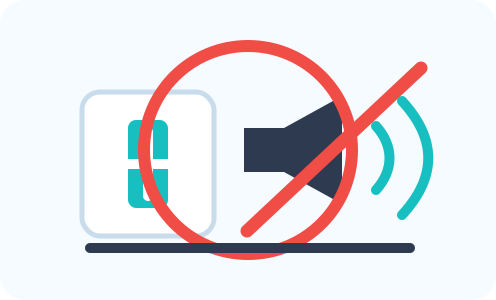
A hospital. A school. A courthouse. Three places where noise causes real harm. India has a legal framework that draws a circle around each of them.
Inside that circle, the silence zone honking rules set tighter limits and higher fines. Cross into it with a hand on the horn and you face a different tariff from the usual traffic fine.
This guide explains the rules, the science, and the enforcement. Our guide to traffic fines in India [internal link to: L1 Pillar: E-Challan and Traffic Law] maps the full fine schedule.
The Law Behind the Silence Zone
Silence zones are created under the Noise Pollution (Regulation and Control) Rules 2000. These rules were made under the Environment (Protection) Act 1986.
Rule 2(c) of the Noise Pollution Rules defines a silence zone. It is any area within at least 100 metres around hospitals, educational institutions, and courts.
State governments can declare additional areas as silence zones. They issue a notification through the official gazette. Once declared, the lower decibel limits and higher fines apply.
Why Honking Harms More Than You Think
A single car horn at close range peaks near 90 to 110 dB. The silence zone limit is 50 dB. Even one brief honk is a significant breach.
For patients, repeated noise above 50 dB at night raises cortisol and blood pressure. Recovery slows. Studies show post-surgical patients in noisy wards take longer to heal.
For court proceedings, external noise forces clerks and lawyers to repeat themselves. A noisy passage outside can disrupt a sensitive hearing. The silence zone honking rules exist to prevent exactly this.
The noise pollution rules india set different decibel ceilings for different zones. Silence zones have the tightest limit: 50 dB during the day and 40 dB at night.
How Silence Zone Limits Compare
A 50 dB daytime limit is about the volume of a quiet conversation. A standard car horn can peak at around 90 to 110 dB. Even a brief honk can blow past the silence zone limit.
| Zone type | Day limit (dB) | Night limit (dB) |
|---|---|---|
| Industrial | 75 | 70 |
| Commercial | 65 | 55 |
| Residential | 55 | 45 |
| Silence zone | 50 | 40 |
The Fine for Honking in a Silence Zone
Section 194F of the Motor Vehicles Act covers unnecessary use of horns and was strengthened by the 2019 amendment. Within a silence zone, the fine is ₹1,000 for a first offence and ₹2,000 for a repeat.
Compare this to the regular honking fine under Section 177 of ₹500 for a first offence. The silence zone fine is double. The gap reflects the intent: hospitals and schools need quiet by law, not just courtesy.
Vehicles using a pressure horn are banned entirely under Central Motor Vehicles Rules. These produce a loud multi-tone blast that exceeds safe levels in any zone.
The 100 Metre Rule in Practice
Drivers often do not know exactly where the 100 metre boundary begins. There is no painted line on most roads. Signboards are the main marker, but they are missing on many stretches.
Courts have held that the silence zone honking rules apply within 100 metres even when no signboard is present. If you are within view of a hospital gate, you are likely within the zone.
This creates a practical challenge. A driver passing a hospital in heavy traffic may honk out of reflex. The law does not exempt a reflex. The zone is the zone regardless of intent.
Who Enforces the Noise Pollution Rules?
Enforcement sits with the traffic police for vehicle horn violations. The Pollution Control Board handles industrial and commercial noise. The two systems sometimes overlap at busy hospital zones.
Traffic officers can issue challans for horn violations under the MV Act on the spot. Noise complaints under the Environment Protection Act go through a longer process.
The noise pollution rules india give a Deputy SP the authority to act on silence zone noise complaints. That power is rarely fully used, which is why enforcement stays patchy.
You can check any honking or noise challan online with your vehicle number if you suspect one was issued.
State Specific Initiatives
Some cities have gone beyond the baseline rules. Pune traffic police ran No Horn campaigns around major hospitals. The drives involved officers with decibel meters at key junctions.
Mumbai has observed No Horn Day on several occasions. The concept draws attention to the damage that urban honking causes to patients and students.
Delhi expanded its silence zones in 2008. It added 100 metres around courts and government offices, on top of hospitals and schools.
Chennai and Hyderabad have also run hospital zone enforcement drives. Local NGOs and resident welfare associations have filed complaints that led to brief but visible crackdowns.
These city-level efforts show that the noise pollution rules india can be enforced when there is local will. The law is ready. What it needs is consistent use.
The Role of Vehicle Horn Standards
Not every horn is legal. Central Motor Vehicles Rules cap any vehicle horn at 112 dB at 7.5 metres.
A horn above that is illegal on any road. Police can issue a challan for the horn itself, separate from the zone fine.
Multi-tone pressure horns are banned. They were common on trucks and modified cars. They can exceed 120 dB and have caused accidents by startling other drivers.
The Fine Is Only Part of the Picture
A ₹1,000 fine gets attention. The rules do more than that, though. They signal that quiet is a legal right, not a courtesy.
Patients in hospitals, children in exam halls, and people in court all have a legal claim to quiet. The silence zone is how that claim is protected on the road.
This framing matters. It moves the debate from noise as a nuisance to noise as a harm. Courts treat it that way. The fine backs up that position.
Honking drivers near a hospital are not just being rude. Under Indian law, they are breaching a statutory duty. The rules in a silence zone make that breach visible and penalised.
What Drivers Can Do Near Silence Zones
Awareness is the first step. Know where hospitals, courts, and schools sit on your routes. A mental map of silence zones takes only a few minutes.
Avoid the horn reflex. Most urban honking is habit. Near a silence zone, that habit becomes an offence.
Check for signboards. Most declared zones have signs. Faded or missing signs do not remove the zone's legal status.
If you are near a hospital at night, the 40 dB limit applies. A single honk at that hour is a clear breach. Plan routes to avoid hospital frontages after 10 pm.
If you are in doubt, stay silent. A missed honk never hurt anyone. A well-aimed one in a silence zone can cost you ₹1,000.
The Health Case for Silence Zones
Research links hospital zone noise to slower patient recovery. Studies show that noise above 50 dB at night disrupts sleep and raises stress hormones. For someone already ill, this matters.
For students, noise above 55 dB reduces comprehension and memory retention. A noisy exam environment can measurably affect results. Silence zone honking rules are a direct public health intervention.
Courtrooms need quiet for different reasons. A noisy environment outside can disrupt proceedings, make oral arguments hard to hear, and erode judicial concentration.
Making It Work: What Would Help
The silence zone honking rules are strong on paper. Enforcement is the gap. A few practical steps could close it.
Better signage is the simplest fix. Every declared zone needs a clear board at the entry point. The board should state the noise limit, not just the zone name.
Decibel meters at busy junctions near hospitals would add teeth. A reading above 50 dB during the day, or 40 dB at night, triggers a challan on the spot.
Public awareness also helps. Most drivers do not know the 100 metre rule. A short campaign linked to road safety week could spread the word fast.
The law is not the problem. The gap is between what the law says and what drivers know. Fill the awareness gap, and the enforcement gap shrinks on its own.
The Gap Between Law and Reality
A research team monitored 17 declared silence zone sites across seven major cities. None of them met the national noise standard. Not one.
The reasons are layered. Enforcement is irregular. Signboards are missing or faded. Drivers do not know the zone limits. And ambient city noise is already high.
The gap is not the law's fault. The law is clear and the limits are set. The gap is one of awareness and willingness to act on it.
This gap mirrors a broader compliance issue. The noise pollution rules india share the same enforcement challenge as lane discipline laws [internal link to: Sibling: Lane Discipline in India, Why Lane Markings Do Not Work as Designed].
The NGT and Supreme Court on Silence Zones
Courts have not left this to chance. The Supreme Court's 2005 In Re Noise Pollution judgment directed all states to implement the 2000 rules strictly.
The National Green Tribunal has taken up cases where hospitals filed complaints about traffic noise. Orders have directed police to post officers near major silence zones.
Courts have also ruled that freedom from excessive noise is part of the right to life under Article 21. Silence zone enforcement is a constitutional duty, not just an admin task.
This judicial backing matters. It means a driver who ignores a silence zone is not just breaking a traffic rule. They are breaching a right that courts protect actively.
Our specific offences sub-cluster [internal link to: L2 Anchor: Specific Offences sub-cluster hub] covers more nuanced rules like modified exhaust fines [internal link to: Sibling: Why Modified Silencers and Loud Exhausts Attract Specific Fines].
And the wider culture of honking is explored in why Indian drivers use horns far more than others [internal link to: Sibling: Why Indian Drivers Use Horns 7x More Than Drivers in Most Countries].
Conclusion
The silence zone honking rules exist for a clear reason. Hospitals, schools, and courts need quiet. The law draws a circle and raises the fine inside it. A ₹1,000 first offence and ₹2,000 repeat make the silence zone a genuinely different legal space. The gap between the rules and daily reality is an enforcement problem, not a legal one. Drive past a hospital quietly and you protect patients, students, and the law at the same time.
Frequently Asked Questions
What are silence zone honking rules in India?
Silence zones ban horn use above 50 dB during the day and 40 dB at night. The area within 100 metres of hospitals, schools, and courts is covered. A fine of ₹1,000 for a first offence applies under Section 194F.
What law creates silence zones in India?
Silence zones are created under the Noise Pollution Rules 2000, made under the Environment Protection Act 1986. The noise pollution rules india also allow state governments to declare additional silence zones.
How far does a silence zone extend?
At least 100 metres around hospitals, educational institutions, and courts. State governments can extend this further when they formally declare additional zones by notification.
Is the silence zone fine higher than a normal honking fine?
Yes. A normal unnecessary honking fine under Section 177 is ₹500. The silence zone fine under Section 194F is ₹1,000 for a first offence. The silence zone honking rules deliberately carry a higher tariff.
What are the noise pollution rules india decibel limits for silence zones?
The noise pollution rules india set 50 dB during the day and 40 dB at night inside silence zones. These are stricter than residential (55/45 dB) and far stricter than commercial (65/55 dB) zones.





CarInfo is your all-in-one app for all your vehicle info needs and RTO vehicle information. Now manage all your vehicles in one place. Trace your car number with owner name


Velocitypedia Private Limited, Unit 231, D21 Corporate Park, New Delhi : 110077
Follow Our Journey:
.e182ab86.svg)


Popular Hatchbacks
Download the
CarInfo App: