Challan
Why Wrong Side Driving Has a Higher Fine Than Lane Changing

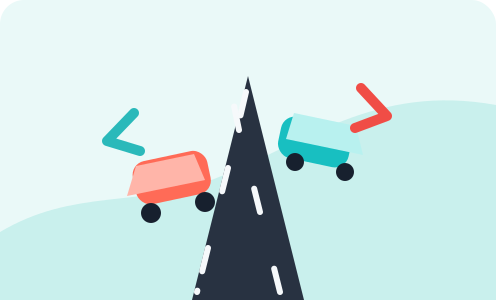
Picture two drivers on the same busy road. One drifts across a lane line. The other turns the car straight into oncoming traffic. Both get stopped. Both get a challan. Yet the second driver pays far more money.
Many riders feel both acts are minor. They are not. The fine you pay says a lot about the danger you create. One mistake risks a scrape. The other risks a funeral.
The gap is not random. It tracks one thing, which is risk. The wrong side fine reason rests on a single idea. It asks who could get hurt if the move goes wrong.
This guide breaks down both offences in plain words. We cover the legal sections, the exact fines, and the logic behind them. For the wider picture, our guide to traffic fines in India covers every major offence.
What Counts as Wrong Side Driving
Wrong side driving means moving against the authorised flow of traffic. You face vehicles that expect a clear path. In simple terms, you are going the wrong way.
It shows up in many forms. A rider takes a short cut down a one way street. A car skips a U turn and drives against traffic for a few metres. A bus overtakes into the oncoming lane on a highway.
People do it to save time. A missed exit feels costly. A long detour feels worse. So drivers gamble with a quick run against traffic. The law does not see this as a small slip. It treats it as dangerous driving. That is the heart of the wrong side fine reason.
What Counts as a Lane Changing Offence
Lane changing problems happen inside traffic moving the same way. You switch lanes with no signal. You weave between cars. You sit on top of a lane marking instead of within it.
This is a breach of lane discipline. The vehicles around you still move in your direction. The risk is real but smaller. Lane discipline fines reflect that lower level of danger.
Poor lane habits still cause crashes. A sudden cut forces others to brake hard. Even so, the threat is rarely a direct head on hit.
Most lane offences happen in slow city traffic. People hop lanes to gain a few feet. The speeds are lower. The escape room is wider. A driver behind can usually slow down in time.
The Two Fines Compared
Here is where the difference becomes clear. The two offences fall under different parts of the Motor Vehicles Act 1988.
| Offence | Section | First offence | Repeat offence |
|---|---|---|---|
| Wrong side driving | Section 184, driving dangerously | ₹1,000 to ₹5,000, jail possible | Up to ₹10,000 |
| Improper lane changing | Section 177 or Section 177A | ₹500 | ₹1,500 |
Wrong side driving can cost up to ₹5,000 on the first try. Lane discipline fines start at ₹500. That is a wide gap for two acts that both look like lane mistakes.
Does the Fine Change by State?
The Motor Vehicles Act sets the offence and the upper limits. But states can fix the exact amount within those limits. So the figure on your challan can shift a little by region.
Big cities tend to enforce the top end. Delhi treats wrong side driving as dangerous driving and pushes for the higher fine. Some states keep lane offences light to ease the load on drivers. The rule stays the same, but the price can move.
The Wrong Side Fine Reason: Risk to Oncoming Traffic
The wrong side fine reason is simple once you picture the crash. When you drive against traffic, you create a head on threat. Two vehicles close in on each other at the same moment.
Speed adds up in a head on hit. A car at 50 and another at 50 meet at a combined 100. The force in that crash is brutal. Survival odds drop fast.
A lane change mistake rarely does this. Cars near you move the same way. Even a bad cut usually ends in a side scrape, not a direct hit. That is why these penalties stay lower.
How the Law Ranks Traffic Offences
The Motor Vehicles Act builds a clear ladder of severity. Minor breaches sit at the bottom. Deadly ones sit at the top.
Section 177 covers general offences with no special penalty. It carries ₹500 for a first slip and ₹1,500 for a repeat. Section 177A covers driving rule breaches, with a fine of ₹500 to ₹1,000. Lane discipline fines usually come from these two.
Section 184 sits much higher. It covers dangerous driving. Wrong side driving lands in this bracket. That single placement is the legal core of the wrong side fine reason. The act decides the section. The section decides the fine.
Each offence carries its own logic and its own slab. We map them in our guide to specific traffic offences , from helmets to honking.
The same logic separates other offences too. You can see it in the difference between rash and negligent driving, where intent and danger shape the charge.
Why Head On Crashes Are So Deadly
A head on crash gives you almost no time. Two vehicles approach at a high combined speed. Your eyes and brain cannot react fast enough.
The body also takes more force. In a same direction crash, some speed cancels out. In a head on hit, the speeds stack up. The harm to people inside is far worse.
Government data backs this up. The Ministry of Road Transport and Highways calls wrong side driving the second leading cause of road deaths. In its Road Accidents in India 2023 report, it sat behind only overspeeding. Lane drift does not appear near the top. This data drives the strict approach in policy.
How These Offences Get Caught
Both fines can come two ways. An officer can stop you on the spot. A camera can also catch you and send a challan later.
Wrong side driving is easy to spot. The vehicle faces the wrong way in the frame. Cameras now flag it on many roads. Officers also watch known wrong side hot spots near U turns and one way streets.
Lane offences are harder to prove on camera. They need clear lane marks and a clean view. So many lane cases still rely on an officer on the ground. This gap also shapes how often each fine is issued.
What Compoundable Means for Your Challan
You may hear that some challans can be paid online. These are called compoundable offences. You settle the fine and the matter closes.
A first lane discipline fine is usually compoundable. You can clear it fast. A simple wrong side challan is often compoundable too. But serious cases can be sent to court instead.
Court referral is common when the act causes a crash or injury. Then a judge decides the penalty. This is why two wrong side cases can end very differently.
Fine Progression for Repeat Offenders
The law gets harsher if you repeat the offence. A first wrong side challan can reach ₹5,000. A second one within three years can reach ₹10,000.
Jail time also rises. A first dangerous driving offence can carry up to one year. A repeat offence can carry up to two years. Courts can add community service as well.
| Stage | Wrong side driving | Lane discipline |
|---|---|---|
| First offence | Up to ₹5,000, jail up to 1 year | ₹500 |
| Repeat within 3 years | Up to ₹10,000, jail up to 2 years | ₹1,500 |
| Extra action | Licence suspension and vehicle seizure possible | Usually fine only |
Your licence is also at stake. Traffic police can move to suspend it for repeat wrong side driving. They can seize the vehicle too. Lane discipline penalties rarely reach that level.
This jump in penalties grew sharper after the law changed. You can read how the 2019 amendment raised fines across almost every offence.
How to Check and Clear These Challans
Many drivers do not know a challan exists. Cameras and officers can issue one days later. So it pays to check often.
You can check your pending challans online using just your vehicle number. It shows every due in one place. You can then settle compoundable offences online, with no court visit.
Clearing dues early avoids extra trouble. Unpaid fines can block tasks like RC renewal and ownership transfer. It helps to verify your vehicle RC status before you buy, sell, or renew. Pending challans can also pile up across different states.
How to Avoid Both Fines
Good habits keep you clear of both fines. They also keep you safe.
For wrong side risk, always use the proper U turn. Never enter a one way against the arrow. Do not chase a missed exit by driving back into traffic. Take the next legal turn instead. A two minute detour beats a head on crash.
For lane discipline, signal before every switch. Stay inside your lane lines. Give others time to see your move. Our piece on why lane markings often fail in India explains the design gap.
A Quick Checklist Before You Drive
A few simple habits keep both fines away. Run through them before you pull out.
Plan your turns early so you never need a wrong side shortcut.
Use only marked U turns, even when the queue is long.
Read the one way signs on new roads before you enter them.
Signal at least three seconds ahead of any lane change.
Hold one lane through a junction instead of weaving across.
Check your dues online every few weeks so nothing piles up.
Conclusion
Two lane mistakes can carry two very different fines. The reason is risk, not luck. Wrong side driving points you at oncoming traffic, so the law hits harder. Lane discipline fines stay lower because the danger stays contained. Drive in the right direction, signal your moves, and you protect both your wallet and your life.
Frequently Asked Questions
What is the main wrong side fine reason in India?
The main wrong side fine reason is the head on crash risk. Driving against traffic counts as dangerous driving under Section 184. That places it in a higher bracket than lane discipline fines.
How much is the fine for wrong side driving?
A first wrong side driving offence can reach ₹5,000. A repeat offence within three years can reach ₹10,000. Jail and licence action are also possible.
How much are lane discipline fines?
Lane discipline fines usually range from ₹500 to ₹1,500. They fall under Section 177 or Section 177A. The amount depends on whether it is a first or repeat offence.
Can wrong side driving suspend my licence?
Yes. Repeat wrong side driving can lead to licence suspension. Police may also seize the vehicle. This strict approach is part of the wrong side fine reason.
How can I check pending challans for these offences?
You can check pending challans with your vehicle number on the CarInfo app or website. It lists all pending dues at once. You can then pay the compoundable ones online.




CarInfo is your all-in-one app for all your vehicle info needs and RTO vehicle information. Now manage all your vehicles in one place. Trace your car number with owner name


Velocitypedia Private Limited, Unit 231, D21 Corporate Park, New Delhi : 110077
Follow Our Journey:
.e182ab86.svg)


Popular Hatchbacks
Download the
CarInfo App: